E = −0.45 − (0.0591/2) log (1 / 0.01)
= −0.45 − (0.02955 × 2)
= −0.51 V
Question 18
Define molecularity of the reaction. State any one condition in which a
bimolecular reaction may be kinetically of first order.
Molecularity: It is the number of reacting species
participating in an elementary reaction.
A bimolecular reaction becomes kinetically first order when one of the
reactants is taken in large excess (pseudo-first-order reaction).
Question 19
What happens when D-glucose is treated with the following reagents?
(a) HI
(b) Conc. HNO3
(a) With HI, D-glucose is reduced to n-hexane.
(b) With concentrated HNO3, D-glucose is oxidised to
saccharic (glucaric) acid.
Question 20
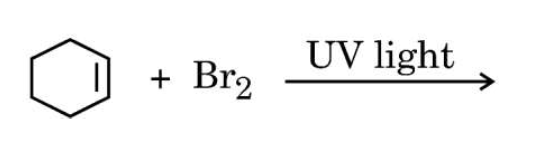
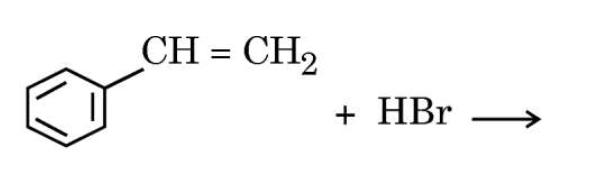
(a) Draw the structures of major monohalo products in each of the following
reactions:
(i)(ii)
OR
(b) Give reasons for the following:
(i) Grignard reagent should be prepared under anhydrous conditions.
(ii) Alkyl halides give alcohol with aqueous KOH whereas in the presence of
alcoholic KOH, alkenes are formed.
(a)
(i) Major product: 1-bromo-1-phenylethane (Markovnikov addition)
(ii) Major product: Bromocyclohexane
(b)
(i) Grignard reagents react with moisture and get destroyed, hence anhydrous
conditions are necessary.
When a certain conductivity cell was filled with 0.05 M KCl solution,
it has a resistance of 100 ohm at 25°C. When the same cell was filled
with 0.02 M AgNO3 solution, the resistance was 90 ohm.
Calculate the conductivity and molar conductivity of AgNO3 solution.
(Given: Conductivity of 0.05 M KCl = 1.35 × 10⁻² ohm−1 cm−1)
(b) Which is more reactive towards nucleophilic substitution and why:
chlorobenzene or 2,4,6-trinitrochlorobenzene?
(c) Which isomer of C4H9Cl has the lowest boiling point?
(a) CH2=CH–CH(Br)–CH3
(b) 2,4,6-trinitrochlorobenzene is more reactive due to strong −I and −M
effect of nitro groups stabilising the Meisenheimer complex.
(c) tert-Butyl chloride
Question 26
(a) Write the mechanism:
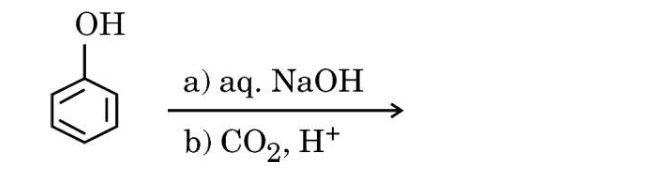
(b) Write the main product of: (i)
(ii)
(a) Acid-catalysed dehydration (E1 mechanism).
(b)(i) Butan-1-ol
(ii) Salicylic acid
Question 27
Answer the following (any three):
(a) What is peptide linkage?
(b) What type of bonds hold a DNA double helix together?
(c) Which one of the following is a polysaccharide?
Sucrose, Glucose, Starch, Fructose
(d) Give one example each for water-soluble vitamins and fat-soluble vitamins.
(a) Peptide linkage: It is the amide linkage (–CONH–) formed
between the –COOH group of one amino acid and the –NH2 group of another.
(b) DNA double helix is held together by hydrogen bonds.
(c) Polysaccharide: Starch.
(d) Water-soluble vitamin: Vitamin C Fat-soluble vitamin: Vitamin A
Question 28
Identify compounds A to F based on the given reactions.
A = Ethyl acetate
B = Ethanol
C = Ethane
D = Acetaldehyde
E = Crotonaldehyde
F = Acetic acid
Case-based Questions
Question 29
Batteries and fuel cells are very useful forms of galvanic cell. Any battery
or cell that we use as a source of electrical energy is basically a galvanic
cell. However, for a battery to be of practical use it should be reasonably
light, compact and its voltage should not vary appreciably during its use.
There are mainly two types of batteries — primary batteries and secondary
batteries.
In the primary batteries, the reaction occurs only once and after use over a
period of time the battery becomes dead and cannot be reused again, whereas
the secondary batteries are rechargeable.
Production of electricity by thermal plants is not a very efficient method
and is a major source of pollution. To solve this problem, galvanic cells are
designed in such a way that energy of combustion of fuels is directly
converted into electrical energy, and these are known as fuel cells. One such
fuel cell was used in the Apollo space programme.
Answer the following questions:
(a) How do primary batteries differ from secondary batteries?
(b) The cell potential of Mercury cell is 1.35 V and remains constant during
its life. Give reason.
(c) Write the reactions involved in the recharging of the lead storage
battery.
OR
(c) Write two advantages of fuel cells over other galvanic cells.
(a) Primary batteries are non-rechargeable and their reactions
occur only once, whereas secondary batteries are rechargeable
and their reactions are reversible.
(b) In a mercury cell, the reactants and products are solids, so the overall
cell reaction does not involve any change in concentration, hence the cell
potential remains constant.
(c) Recharging of lead storage battery:
At cathode: PbSO4 + 2e− → Pb + SO42−
At anode: PbSO4 + 2H2O → PbO2 + 4H+ +
SO42− + 2e−
OR
(c) Advantages of fuel cells:
• High efficiency of energy conversion.
• Environment friendly as pollutants are negligible.
Question 30
The Valence Bond Theory (VBT) explains the formation, magnetic behaviour and
geometrical shapes of coordination compounds whereas the Crystal Field Theory
for coordination compounds is based on the effect of different crystal fields
(provided by ligands taken as point charges), on the degeneracy of d-orbital
energies of the central metal atom/ion. The splitting of the d-orbitals
provides different electronic arrangements in strong and weak crystal
fields. The crystal field theory attributes the colour of the coordination
compounds to d-d transition of the electron. Coordination compounds find
extensive applications in metallurgical processes, analytical and medicinal
chemistry.
Answer the following questions:
(a) What is crystal field splitting energy?
(b) Give reason for the violet colour of the complex
[Ti(H2O)6]3+ on the basis of crystal field theory.
(c) [Cr(NH3)6]3+ is paramagnetic while
[Ni(CN)4]2− is diamagnetic. Explain why.
[Atomic No.: Cr = 24, Ni = 28]
OR
(c) Explain why [Fe(CN)6]3− is an inner orbital complex,
whereas [Fe(H2O)6]3+ is an outer orbital complex.
[Atomic No.: Fe = 26]
(a) Crystal field splitting energy (Δ): It is the energy
difference between the higher and lower sets of d-orbitals formed due to the
interaction of ligands with the central metal ion.
(b) In [Ti(H2O)6]3+, absorption of visible light
causes d-d transition. The transmitted light appears violet, which is the
complementary colour of the absorbed radiation.
(c) In [Cr(NH3)6]3+, Cr3+ has three
unpaired electrons, hence it is paramagnetic. In [Ni(CN)4]2−,
CN− is a strong field ligand causing pairing of electrons, making the
complex diamagnetic.
OR
(c) CN− is a strong field ligand and causes pairing of electrons in
[Fe(CN)6]3−, forming an inner orbital (d2sp3)
complex. H2O is a weak field ligand and does not cause pairing in
[Fe(H2O)6]3+, hence it forms an outer orbital
(sp3d2) complex.
Long answer type Questions
Question 31
(a) (i) At the same temperature, CO2 gas is more soluble in water than
O2 gas. Which one of them will have higher value of KH and why?
(ii) How does the size of blood cells change when placed in an aqueous
solution containing more than 0.9% (mass/volume) sodium chloride?
(iii) 1 molal aqueous solution of an electrolyte A2B3 is
60% ionized. Calculate the boiling point of the solution.
(Given: Kb for H2O = 0.52 K kg mol−1)
OR
(b) (i) Vapour pressures of A and B at 25°C are 75 mm Hg and 25 mm Hg respectively.
If mole fraction of A is 0.4, calculate mole fraction of B in vapour phase.
(ii) Define colligative property. Which colligative property is preferred for
molar mass determination of macromolecules?
(iii) Why are equimolar solutions of sodium chloride and glucose not isotonic?
(a)
(i) O2 has higher KH value because it is less soluble in
water compared to CO2.
(ii) Blood cells shrink due to exosmosis as the solution is hypertonic.
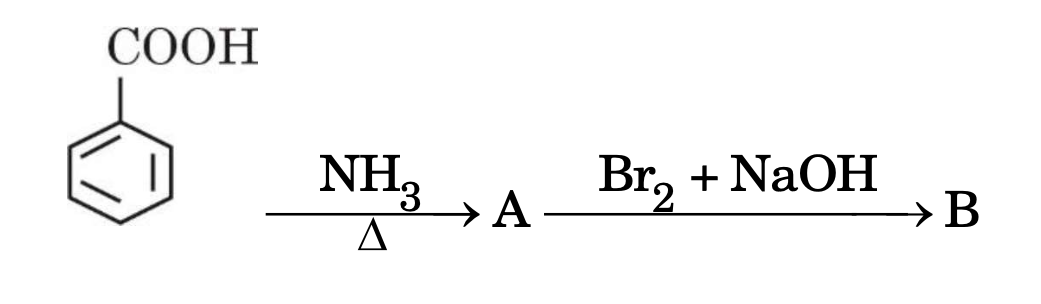
(g) A = Aniline, B = Phenylamine derivative (Hofmann bromamide reaction).
Question 33
(a) (i) Account for the following:
(1) Melting and boiling points of Zn, Cd and Hg are low.
(2) Cr2+ is reducing while Mn3+ is oxidizing.
(3) E° of Cu2+/Cu is +0.34 V.
(ii) Complete and balance:
(1) KMnO4 → (heat)
(2) Cr2O72− + 6I− + 14H+ →
OR
(b) (i) Out of Cu2Cl2 and CuCl2, which is more stable in aqueous solution and why ?
(ii) Write the general electronic configuration of f-block elements.
(iii) Predict which of the following will be coloured in aqueous solution and why :
Sc3+, Fe3+, Zn2+
(Atomic numbers : Sc = 21, Fe = 26, Zn = 30)
(iv) How can you obtain potassium dichromate from sodium chromate ?
(v) Why do transition metals and their compounds show catalytic activity ?
(a)(i) (1) Due to completely filled d-orbitals, metallic bonding is weak.
(2) Cr2+ tends to oxidize to stable Cr3+, Mn3+
reduces to stable Mn2+.
(3) High hydration enthalpy of Cu2+ makes reduction favourable.
(ii)(1) 2KMnO4 → K2MnO4 + MnO2 + O2
(ii)(2) Cr2O72− + 6I− + 14H+ →
2Cr3+ + 3I2 + 7H2O
OR
(b)(i) CuCl2 is more stable due to higher hydration energy of Cu2+.
(ii) General configuration: (n−2)f1–14(n−1)d0–1ns2.
(iii) Fe3+ is coloured due to d–d transition; Sc3+ and Zn2+ are colourless.
(iv) Sodium chromate is acidified with dilute H2SO4 to form potassium dichromate.
(v) Due to variable oxidation states and formation of intermediate complexes.
Multiple Choice type Questions
Question 1
When MnO2 is fused with KOH in air, it gives :
(A) KMnO4
(B) K2MnO4
(C) Mn2O7
(D) Mn2O3
Correct Answer: (B) K2MnO4
Question 2
Ligand EDTA4− is an example of :
(A) Monodentate ligand
(B) Didentate ligand
(C) Tridentate ligand
(D) Polydentate ligand
Correct Answer: (D) Polydentate ligand
Question 3
Which of the following ligand forms chelate complex ?
(A) C2O42−
(B) Cl−
(C) NO2−
(D) NH3
Correct Answer: (A) C2O42−
Question 4
Which of the following contains sp2 hybridised carbon bonded to X ?
(A) CH2=CH–CH2–X
(B) C6H5–CH2–X
(C) CH2=CH–X
(D) CH3–CH2–X
Correct Answer: (C) CH2=CH–X
Question 5
Which of the following is most acidic ?
(A) Benzyl alcohol
(B) Phenol
(C) Cyclohexanol
(D) p-Chlorophenol
Correct Answer: (D) p-Chlorophenol
Question 6
Anisole reacts with HI to give :
(A) Phenol + CH3I
(B) Iodobenzene + CH3OH
(C) Benzyl alcohol + CH3I
(D) Benzyl iodide + CH3OH
Correct Answer: (A) Phenol + CH3I
Question 7
Ethanol on heating with conc. H2SO4 at 413 K gives :
(A) C2H5OSO3H
(B) C2H5–O–CH3
(C) C2H5–O–C2H5
(D) CH2=CH2
Correct Answer: (C) C2H5–O–C2H5
Question 8
An azeotropic solution has lower boiling point when it :
(A) is saturated
(B) shows positive deviation from Raoult’s law
(C) shows negative deviation
(D) shows no deviation
Correct Answer: (B)
Question 9
The relative lowering of vapour pressure is 0.0225. Mole fraction of solute is :
(A) 0.80
(B) 0.725
(C) 0.15
(D) 0.0225
Correct Answer: (D) 0.0225
Question 10
During electrolysis of aqueous NaCl :
(A) H2 is liberated at cathode
(B) Na is formed at cathode
(C) O2 at anode
(D) Cl2 at cathode
Correct Answer: (A)
Question 11
Catalyst alters which quantity of a reaction ?
(A) Enthalpy
(B) Activation energy
(C) Entropy
(D) Internal energy
Correct Answer: (B) Activation energy
Question 12
Rate increases 8 times when concentration is doubled. Order is :
(A) 3
(B) 4
(C) 2
(D) 1
Correct Answer: (A) 3
Assertion–Reason type Questions
Question 13
Assertion (A): Aliphatic primary amines can be prepared by Gabriel phthalimide synthesis.
Reason (R): Alkyl halides undergo nucleophilic substitution with anion formed by phthalimide.
Correct Answer: (A) Both A and R are true and R is the correct explanation of A.
Question 14
Assertion (A): Uracil base is present in DNA.
Reason (R): DNA undergoes self-replication.
Correct Answer: (D) A is false but R is true.
Question 15
Assertion (A): Diazonium salts of aromatic amines are more stable than those of aliphatic amines.
Reason (R): Diazonium salts of aliphatic amines show resonance.
Correct Answer: (C) A is true but R is false.
Question 16
Assertion (A): p-nitroaniline is a weaker base than p-toluidine.
Reason (R): The electron withdrawing effect of –NO2 group in p-nitroaniline makes it a weaker base.
Correct Answer: (A) Both A and R are true and R is the correct explanation of A.
Very short answer type Questions
Question 17
A 6% solution of glucose (molar mass = 180 g mol−1) is isotonic with 2.5% solution of an unknown organic substance. Calculate the molecular weight of the unknown organic substance.
For isotonic solutions: (w / M) must be same
For glucose:
w = 6 g, M = 180
6 / 180 = 1 / 30
For unknown substance:
w = 2.5 g, M = ?
2.5 / M = 1 / 30
M = 75 g mol−1
Answer: Molecular weight = 75 g mol−1
Question 18
A first order reaction has a rate constant 1.25 × 10⁻³ s−1. How long will 5 g of this reactant take to reduce to 2.5 g?
For first order reaction:
t = 2.303 / k × log (a / at)
a = 5 g, at = 2.5 g
log (5 / 2.5) = log 2 = 0.301
t = (2.303 × 0.301) / (1.25 × 10⁻³)
t ≈ 554 s
Answer: Time required = 554 s
Question 19
(a) What is lanthanoid contraction? Why is actinoid contraction greater than lanthanoid contraction?
OR
(b) Why do transition metals have high enthalpy of atomization? Which element of 3d-series has lowest enthalpy of atomization?
(a) Lanthanoid contraction is the gradual decrease in atomic and ionic radii of lanthanoids with increase in atomic number.
Actinoid contraction is greater because 5f orbitals have poor shielding effect compared to 4f orbitals.
OR
(b) Transition metals have high enthalpy of atomization due to strong metallic bonding arising from unpaired d-electrons.
The element with lowest enthalpy of atomization in 3d-series is Zinc (Zn).
Question 20
(a) In the following pair of compounds, which compound undergoes SN2 reaction faster and why?
OR
(b) Write the major product when ethylbenzene reacts with Cl2 in presence of UV light.
(a) Alkyl iodide undergoes SN2 reaction faster than alkyl bromide because C–I bond is weaker and I− is a better leaving group.
OR
(b) Major product is benzyl chloride due to benzylic free radical stability.
Question 21
Define the following terms:
(a) Denaturation of protein
(b) Invert sugar
(a) Denaturation of protein is the loss of biological activity of protein due to change in its native structure without breaking peptide bonds.
(b) Invert sugar is an equimolar mixture of glucose and fructose obtained by hydrolysis of sucrose.
Short answer type Questions
Question 22
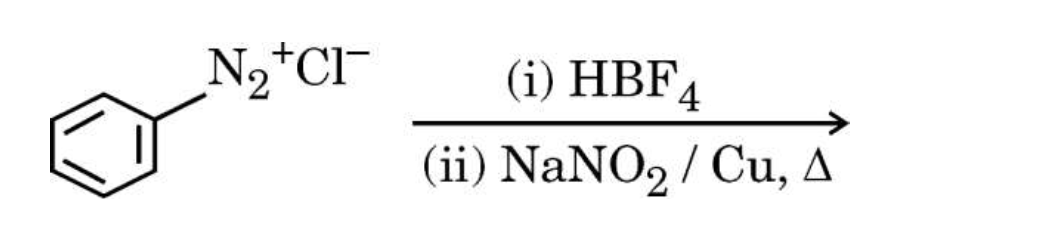
Write the structures of A, B and C in the following reactions :
(a)(b)
(a)
A : CH3–CH2–CN (Ethyl cyanide)
B : CH3–CH2–CONH2 (Propionamide)
C : CH3–CH2–NH2 (Ethylamine)
(b)
A : Aniline (C6H5NH2)
B : Benzene diazonium chloride (C6H5N2+Cl−)
C : Benzene (C6H6)
Question 23
Write the reaction involved in the following :
(a) Wolff-Kishner reduction
(b) Decarboxylation reaction
(c) Cannizzaro reaction
(a) R–CO–R′ + NH2NH2 / KOH → R–CH2–R′ + N2 + H2O
(b) R–COONa + NaOH → R–H + Na2CO3
(c) 2HCHO + NaOH → HCOONa + CH3OH
Question 24
Give the equations of reactions for the preparation of : (any three)
(a) Chlorine is ortho/para directing in electrophilic aromatic substitution reactions, though chlorine is an electron withdrawing group.
(b) Racemic mixture is optically inactive.
(c) Allyl chloride is hydrolysed more readily than n-propyl chloride.
(a) Chlorine shows +R effect due to lone pair donation, increasing electron density at ortho and para positions.
(b) Equal amounts of dextrorotatory and laevorotatory forms cancel each other’s optical rotation.
(c) Allyl carbocation formed is resonance stabilised, hence hydrolysis is faster.
Question 26
The vapour pressure of a solvent at 283 K is 100 mm Hg. Calculate the vapour pressure of a dilute solution containing 1 mole of a strong electrolyte AB in 50 moles of the solvent at 283 K (assuming complete dissociation of solute AB).
i = 2
Total moles = 50 + 2 = 52
Xsolvent = 50 / 52
Vapour pressure = 100 × 50 / 52 = 96·15 mm Hg
Question 27
Calculate emf of the following cell :
Zn (s) | Zn2+ (0·1 M) || Sn2+ (0·001 M) | Sn (s)
Carbohydrates are essential for life in both plants and animals. Carbohydrates are used as storage molecules as starch in plants and glycogen in animals. Chemically they are polyhydroxy aldehydes or ketones. On the basis of their behaviour on hydrolysis, carbohydrates are classified as monosaccharides, oligosaccharides and polysaccharides. All monosaccharides are reducing sugars, i.e., they are oxidized by Tollens’ reagent and Fehling’s solution. A monosaccharide like glucose is aldohexose and its molecular formula was found to be C6H12O6. After reacting with different reagents like HI, H2N–OH, Bromine water, (CH3CO)2O, etc. its structure was found to contain one aldehyde group, one primary alcoholic group (–CH2OH) and four secondary alcoholic groups (>CHOH). Despite having the aldehyde group, glucose does not give some of the reactions of aldehyde group like Schiff’s test, NaHSO3 addition. This explains the existence of glucose in two cyclic hemiacetal forms which differ only in the configuration of the hydroxyl group at C–1.
Answer the following questions :
(a) What are reducing sugars?
(b) Classify the following into monosaccharide and disaccharide :
Fructose, Sucrose, Lactose, Galactose
(c) Name the polysaccharide which is known as ‘animal starch’. Why is it called ‘animal starch’?
OR
(c) (i) Name the isomers of glucose which in the cyclic form differ only in the configuration of the – OH group at C – 1.
(ii) Presence of which functional group was detected when glucose reacted with Br2 water?
(a) Reducing sugars are carbohydrates which reduce Tollens’ reagent and Fehling’s solution due to the presence of a free aldehyde or ketone group.
(c) Glycogen is known as animal starch. It is called animal starch because it is stored in animals in the liver and muscles in the same way starch is stored in plants.
OR
(c) (i) α-glucose and β-glucose
(ii) Aldehyde (–CHO) group
Question 30
Transition metals have incomplete d-subshell either in neutral atom or in their ions. The presence of partly filled d-orbitals in their atoms makes transition elements different from that of the non-transition elements. With partly filled d-orbitals, these elements exhibit certain characteristic properties such as display of a variety of oxidation states, formation of coloured ions and entering into complex formation with a variety of ligands. The transition metals and their compounds also exhibit catalytic properties and paramagnetic behaviour. The transition metals are very hard and have low volatility. An examination of the E0M2+/M values shows the varying trends :
E0M2+/M
V
−1·18
Cr
−0·91
Mn
−1·18
Fe
−0·44
Co
−0·28
Ni
−0·25
Cu
+0·34
Zn
−0·76
Answer the following questions :
(a) On what basis can we say that Cu is a transition element but Zn is not ? (Atomic number : Cu = 29, Zn = 30)
(b) Why do transition elements show variety of oxidation states ?
(c) (i) Why do E0M2+/M values show irregular trend from Vanadium to Zinc ?
(ii) How is the variability in oxidation states of transition metals different from that of the non-transition elements ?
OR
(c) (i) Of the d4 species, Cr2+ is strongly reducing while Mn3+ is strongly oxidizing. Why ? (Atomic number : Cr = 24, Mn = 25)
(ii) Complete the following ionic equation :
2MnO4− + H2O + I− →
(a) Cu has incomplete d-subshell in its Cu2+ ion, whereas Zn and Zn2+ both have completely filled d-subshell. Hence Cu is a transition element but Zn is not.
(b) Transition elements show variable oxidation states due to the small energy difference between (n−1)d and ns orbitals, allowing participation of different numbers of electrons in bonding.
(c) (i) The irregular trend in E0M2+/M values from Vanadium to Zinc is due to variations in atomisation energy, ionisation energy and hydration energy of the metal ions.
(ii) Transition metals show variable oxidation states due to involvement of both ns and (n−1)d electrons, whereas non-transition elements generally show fixed oxidation states due to involvement of only ns or np electrons.
OR
(c) (i) Cr2+ (d4) readily loses an electron to form stable Cr3+ (d3), hence it is strongly reducing. Mn3+ (d4) readily gains an electron to form stable Mn2+ (d5), hence it is strongly oxidizing.
(ii)
2MnO4− + H2O + I− → 2MnO2 + IO3− + 2OH−
Long answer type Questions
Question 31
Answer any five of the following :
(a) How is the crystal field splitting energy for octahedral complex (Δo) related to that of tetrahedral complex (Δt) ?
(b) Write the IUPAC name of the following complex :
[PtCl2(en)2] (NO3)2
(c) Write the geometry and magnetic behaviour of the complex [Ni(CO)4] on the basis of Valency Bond Theory (VBT).
(d) What type of isomerism is shown by the complex [Co(NH3)6] [Cr(CN)6] ?
(e) For the coordination compound on the basis of crystal field theory, write the electronic configuration for d4 ion if Δo < P. Is the coordination compound a high spin or low spin complex ?
(f) Out of [Co(NH3)6]3+ and [Co(NH3)4Cl2]+, which complex is heteroleptic and why ?
(g) Draw the structures of optical isomers of [PtCl2(en)2]2+.
(a) Crystal field splitting energy of tetrahedral complex is smaller and is related as
Δt = 4/9 Δo.
(c) The complex [Ni(CO)4] has tetrahedral geometry and is diamagnetic due to pairing of electrons and formation of sp3 hybrid orbitals.
(d) The complex shows coordination isomerism.
(e) For d4 ion when Δo < P, electronic configuration is
t2g3 eg1.
Hence, the complex is a high spin complex.
(f) [Co(NH3)4Cl2]+ is heteroleptic because it contains more than one type of ligand (NH3 and Cl−).
(g) [PtCl2(en)2]2+ shows optical isomerism and exists as a pair of non-superimposable mirror images (d- and l- forms).
Question 32
(a) (i) Account for the following :
(1) Oxidation of aldehydes is easier as compared to ketones.
(2) The alpha (α) hydrogen atoms of aldehydes are acidic in nature.
(ii) Write the products in the following reactions :
(1) Acetophenone + NaOH / I2 → ? + ?
(2) Benzoyl chloride + (CH3)2Cd → ? + CdCl2
(iii) Give a simple chemical test to distinguish between ethanoic acid and ethanal.
OR
(b) (i) Draw structure of the 2,4-dinitrophenylhydrazone of benzaldehyde.
(ii) Arrange the following in increasing order of their reactivity towards HCN :
CH3COCH3, (CH3)3C–COCH3, CH3CHO
(iii) How can you convert phenyl magnesium bromide to benzoic acid ?
(iv) Give a simple chemical test to distinguish between benzaldehyde and ethanal.
(v) Write the main product in the following reaction :
CH3–CO–CH2–COOC2H5
→ (i) NaBH4 (ii) H+
(a)(i)(1) Aldehydes are easily oxidized because they contain a hydrogen atom attached to the carbonyl carbon, whereas ketones do not.
(a)(i)(2) The α-hydrogen atoms of aldehydes are acidic due to resonance stabilization of the enolate ion formed after removal of α-hydrogen.
(a)(ii)(1) Iodoform (CHI3) and sodium benzoate are formed.
(a)(ii)(2) Acetophenone is formed.
(a)(iii) Ethanal gives silver mirror with Tollens’ reagent, while ethanoic acid does not.
OR
(b)(i) Benzaldehyde forms an orange coloured 2,4-dinitrophenylhydrazone derivative.
(b)(ii) (CH3)3C–COCH3 < CH3COCH3 < CH3CHO
(b)(iii) Phenyl magnesium bromide reacts with CO2 followed by acidic hydrolysis to give benzoic acid.
(b)(iv) Ethanal gives iodoform test while benzaldehyde does not.
(b)(v) CH3–CHOH–CH2–COOC2H5 is formed.
Question 33
(a) (i) The resistance of 0.05 M CH3COOH solution is found to be 100 ohm. If the cell constant is 0.0354 cm−1, calculate the molar conductivity of the acetic acid solution.
(ii) State Faraday’s first law of electrolysis. How much charge in Faraday is required for the reduction of 1 mol of MnO4− to Mn2+ ?
OR
(b) (i) The conductivity of 0.0025 mol L−1 acetic acid is 5.25 × 10⁻⁵ S cm−1. Calculate its degree of dissociation if Λm0 for acetic acid is 390 S cm2 mol−1.
(ii) Write anode, cathode and overall reaction of lead storage battery.
(a)(ii) Faraday’s first law states that the mass of substance deposited is directly proportional to the quantity of electricity passed.
MnO4− → Mn2+ requires 5 electrons, hence 5 Faradays.
Which of the following does not show variable oxidation states ?
(A) Fe
(B) Cu
(C) Mn
(D) Sc
Answer: (D) Sc
Question 2
The type of isomerism shown by the complex [CoCl2(en)2]+ is :
(A) Ionisation isomerism
(B) Geometrical isomerism
(C) Linkage isomerism
(D) Coordination isomerism
Answer: (B) Geometrical isomerism
Question 3
Which of the following is diamagnetic in nature ?
(A) Co3+, octahedral complex with strong field ligand
(B) Co3+, octahedral complex with weak field ligand
(C) Co3+, in a square planar complex
(D) Co3+, in a tetrahedral complex
[Atomic number : Co = 27]
Answer: (A)
Question 4
Consider the following reaction : Chlorobenzyl chloride + KCN → ?
The major product of the reaction is :
(A) para-cyanobenzyl cyanide
(B) para-cyanobenzyl chloride
(C) para-chlorobenzyl cyanide
(D) ortho-cyanobenzyl cyanide
Answer: (C)
Question 5
Which one of the following compounds has the lowest pKa value ?
(A) p-Cresol
(B) p-Nitrophenol
(C) m-Nitrophenol
(D) 2,4,6-Trinitrophenol
Answer: (D) 2,4,6-Trinitrophenol
Question 6
(CH3)2CH–O–CH3 when treated with HI gives :
(A) (CH3)2CH–I + CH3OH
(B) (CH3)2CH–OH + CH3I
(C) (CH3)2CH–I + CH3I
(D) (CH3)2CH–OH + CH3OH
Answer: (B)
Question 7
Which of the following compounds on treatment with benzene sulphonyl chloride forms an alkali-soluble precipitate ?
(A) CH3CONH2
(B) (CH3)3N
(C) (CH3)2NH
(D) CH3CH2NH2
Answer: (D)
Question 8
The order of increasing basicities of CH3NH2 (I), (CH3)2NH (II), (CH3)3N (III) and C6H5NH2 (IV) in aqueous media is :
(A) IV < III < I < II
(B) II < I < IV < III
(C) I < II < III < IV
(D) II < III < I < IV
Answer: (A)
Question 9
The vitamin which plays an important role in coagulating blood is :
(A) Vitamin A
(B) Vitamin E
(C) Vitamin D
(D) Vitamin K
Answer: (D) Vitamin K
Question 10
When a catalyst increases the rate of a chemical reaction, then the rate constant (k) :
(A) remains constant
(B) decreases
(C) increases
(D) may increase or decrease depending on the order of the reaction
Answer: (C)
Question 11
A 1% solution of solute ‘X’ is isotonic with a 6% solution of sucrose (molar mass = 342 g mol−1). The molar mass of solute ‘X’ is :
(A) 34.2 g mol−1
(B) 57 g mol−1
(C) 114 g mol−1
(D) 3.42 g mol−1
Answer: (C)
Question 12
During the electrolysis of aqueous NaCl, the cathodic reaction is :
(A) Oxidation of Cl− ion
(B) Reduction of Na+ ion
(C) Oxidation of H2O
(D) Reduction of H2O
Answer: (D)
Assertion–Reason type Questions
Question 13
Assertion (A) : Addition of ethylene glycol to water lowers its freezing point.
Reason (R) : Ethylene glycol is insoluble in water due to lack of its ability to form hydrogen bonds with water molecules.
Answer: (C) Assertion (A) is true, but Reason (R) is false.
Question 14
Assertion (A) : Order of reaction and molecularity are always same for complex reactions.
Reason (R) : Order is determined experimentally and molecularity is applicable only for elementary reactions.
Answer: (D) Assertion (A) is false, but Reason (R) is true.
Question 15
Assertion (A) : The boiling point of ethanol is higher than that of dimethyl ether.
Reason (R) : Ethanol molecules are associated through hydrogen bonding whereas in dimethyl ether, it is not possible.
Answer: (A) Both Assertion (A) and Reason (R) are true and Reason (R) is the correct explanation of Assertion (A).
Question 16
Assertion (A) : Aniline does not undergo Friedel–Crafts reaction.
Reason (R) : Friedel–Crafts reaction is an electrophilic substitution reaction.
Answer: (B) Both Assertion (A) and Reason (R) are true, but Reason (R) is not the correct explanation of Assertion (A).
Very short answer type Questions
Question 17
(a) Define molal depression constant. How is it related to enthalpy of fusion ?
OR
(b) What type of deviation is shown by ethanol and acetone mixture ? Give reason. What type of azeotropic mixture is formed by that deviation ?
(a) Molal depression constant is the depression in freezing point produced when 1 mol of solute is dissolved in 1 kg of solvent.
Kf = (R Tf2 M) / ΔHfus
OR
(b) Ethanol–acetone mixture shows positive deviation due to weaker intermolecular interactions and forms a minimum boiling azeotrope.
Question 18
(a) In a reaction, if the concentration of reactant ‘X’ is tripled, the rate of reaction becomes twenty-seven times. What is the order of the reaction ?
(b) State a condition under which a bimolecular reaction is kinetically a first-order reaction. Give an example of such a reaction.
(a) Order of reaction = 3
(b) When one reactant is present in large excess. Example: Acid-catalysed hydrolysis of ethyl acetate.
(a) Which halogen compound in the following pair will react faster in SN2 reactions and why ?
CH3–CH2–I OR CH3–CH2–Br
(b) Why is chloroform stored in closed dark coloured bottles ?
(a) CH3–CH2–I reacts faster due to weaker C–I bond and better leaving group.
(b) To prevent oxidation of chloroform to poisonous phosgene in presence of light and air.
Question 21
Give reaction of glucose with the following :
(a) HCN
(b) Conc. HNO3
(a) Glucose reacts with HCN to form cyanohydrin.
(b) On oxidation with conc. HNO3, glucose forms saccharic acid.
Short answer type Questions
Question 22
A solution is prepared by dissolving 5 g of a non-volatile solute in 200 g of water. It has a vapour pressure of 31.84 mm Hg at 300 K. Calculate the molar mass of the solute.
(Vapour pressure of pure water at 300 K = 32 mm Hg)
Relative lowering of vapour pressure = (32 − 31.84) / 32 = 0.005
Moles of water = 200 / 18 = 11.11 mol
Moles of solute = 0.005 × 11.11 = 0.0555 mol
Molar mass = 5 / 0.0555 ≈ 90 g mol⁻¹
Question 23
The conductivity of 0.2 M solution of KCl is 2.48 × 10⁻² S cm−1. Calculate its molar conductivity and degree of dissociation (α).
Given :
Λ°K+ = 73.5 S cm2 mol−1
Λ°Cl− = 76.5 S cm2 mol−1
The involvement of (n − 1)d electrons in the behaviour of transition elements impart certain distinct characteristics to these elements. Thus, in addition to variable oxidation states, they exhibit paramagnetic behaviour, catalytic properties and tendency for the formation of coloured ions. The transition metals react with a number of non-metals like oxygen, nitrogen and halogens. KMnO4 and K2Cr2O7 are common examples.
The two series of inner transition elements, lanthanoids and actinoids, constitute the f-block of the periodic table. In the lanthanoids, there is regular decrease in atomic size with increase in atomic number due to the imperfect shielding effect of 4f-orbital electrons which causes contraction.
Answer the following questions :
(a) Why do transition metals and their compounds act as good catalysts ?
(b) What is the cause of contraction in the atomic size of lanthanoids ?
(c) Define lanthanoid contraction. How does it affect the atomic radii of the third transition series and the second transition series ?
OR
(c) In aqueous media, which is a stronger reducing agent — Cr2+ or Fe2+ and why ?
(a) Transition metals and their compounds act as good catalysts due to the presence of vacant d-orbitals and their ability to show variable oxidation states.
(b) The contraction in atomic size of lanthanoids is due to the imperfect shielding effect of 4f-electrons.
(c) Lanthanoid contraction is the gradual decrease in atomic and ionic radii of lanthanoids with increasing atomic number. Due to this, the atomic radii of the third transition series elements are almost similar to those of the second transition series elements.
OR
(c) Cr2+ is a stronger reducing agent than Fe2+ because Cr3+ formed is more stable due to half-filled t2g configuration.
Question 30
Transition metals have incomplete d-subshell either in neutral atom or in their ions. The presence of partly filled d-orbitals in their atoms makes transition elements different from that of the non-transition elements. With partly filled d-orbitals, these elements exhibit certain characteristic properties such as display of a variety of oxidation states, formation of coloured ions and entering into complex formation with a variety of ligands. The transition metals and their compounds also exhibit catalytic properties and paramagnetic behaviour. The transition metals are very hard and have low volatility. An examination of the E°M2+/M values shows the varying trends :
E°M2+/M values (V):
V : −1.18 Cr : −0.91 Mn : −1.18 Fe : −0.44
Co : −0.28 Ni : −0.25 Cu : +0.34 Zn : −0.76
Answer the following questions :
(a) On what basis can we say that Cu is a transition element but Zn is not ? (Atomic number : Cu = 29, Zn = 30)
(b) Why do transition elements show variety of oxidation states ?
(c) (i) Why do E°M2+/M values show irregular trend from Vanadium to Zinc ?
(ii) How is the variability in oxidation states of transition metals different from that of the non-transition elements ?
OR
(c) (i) Of the d4 species, Cr2+ is strongly reducing while Mn3+ is strongly oxidizing. Why ? (Atomic number : Cr = 24, Mn = 25)
(ii) Complete the following ionic equation :
4− + H2O + I− →
(a) Cu has partially filled d-orbitals in its Cu2+ state, whereas Zn has completely filled d10 configuration in both atom and Zn2+ ion, hence Zn is not a transition element.
(b) Transition elements show variable oxidation states due to the small energy difference between (n−1)d and ns orbitals.
(c)(i) The irregular trend in E° values is due to differences in enthalpy of atomization, ionization energy and hydration energy of the metal ions.
(c)(ii) Transition metals show variable oxidation states due to involvement of d-electrons, whereas non-transition elements show fixed oxidation states due to involvement of only s and p electrons.
OR
(c)(i) Cr2+ is strongly reducing as it gets oxidized to stable Cr3+, while Mn3+ is strongly oxidizing as it gets reduced to stable Mn2+ configuration.
(c)(ii) 2MnO4− + H2O + I− → 2MnO2 + IO3− + 2OH−
Long answer type Questions
Question 31
(a) (i) Calculate emf of the following cell at 25°C :
Zn (s) | Zn2+ (0.001 M) || Cd2+ (0.1 M) | Cd (s)
Given : E°Zn2+/Zn = −0.76 V,
E°Cd2+/Cd = −0.40 V [log 10 = 1]
(ii) State Faraday’s second law of electrolysis. How will the pH of aqueous NaCl solution be affected when it is electrolysed ?
OR
(b) (i) Calculate the ΔrG° and log Kc for the following cell reaction :
Fe (s) + Ag+ (aq) ⇌ Fe2+ (aq) + Ag (s)
Given : E°Fe2+/Fe = −0.44 V,
E°Ag+/Ag = +0.80 V,
1 F = 96500 C mol−1
(ii) Write any two advantages of the fuel cells over primary and secondary batteries ?
(iii) How many Faradays are required for the oxidation of 1 mole of H2O to O2 ?
(a)(ii)
Faraday’s second law: When same quantity of electricity is passed through different electrolytes, the masses of substances liberated are proportional to their equivalent weights.
During electrolysis of aqueous NaCl, OH− ions accumulate, hence pH increases.
(b)(i)
(1) Due to resonance, only one –NH2 group is free to react.
(2) Acetaldehyde has less steric hindrance and greater electrophilicity.
(b)(ii)
O2N–CH2–COOH > HCOOH > CH3COOH
(b)(ii)(2)
DIBAL-H
(b)(iii)
R–CH2–COOH + Br2/P → R–CHBr–COOH
Question 33
Attempt any five of the following :
(a) Write the IUPAC name of the complex :
[Co(H2O)(CN)(en)2]2+
(b) Why is geometrical isomerism not possible in tetrahedral complexes having two different types of unidentate ligands coordinated with the central metal ion ?
(c) Arrange the following complex ions in increasing order of their crystal field splitting energy (Δo) :
[Co(NH3)6]3+, [CoF6]3−, [Co(CN)6]3−
(d) Write the hybridization and magnetic character of the complex [Ni(CO)4] on the basis of valence bond theory.
[Atomic No. : Ni = 28]
(e) Out of [CoF6]3− and [Co(C2O4)3]3−, which one complex is :
(i) more stable ?
(ii) the high spin complex ?
(f) What is the difference between an ambidentate ligand and bidentate ligand ?
(g) Write the electronic configuration of d5 in terms of t2g and eg in an octahedral field when :
(i) Δo > P, and (ii) Δo < P
(b) In tetrahedral complexes, all four positions are equivalent. Hence, different spatial arrangements of ligands do not give distinct geometrical isomers.
(c) Increasing order of Δo :
[CoF6]3− < [Co(NH3)6]3+ < [Co(CN)6]3−
(d) In [Ni(CO)4], Ni undergoes sp3 hybridization. All electrons are paired, hence the complex is diamagnetic.
(e)
(i) More stable complex : [Co(C2O4)3]3− (due to chelate effect).
(ii) High spin complex : [CoF6]3− (F− is a weak field ligand).
(f) An ambidentate ligand can coordinate through two different donor atoms but only one at a time, whereas a bidentate ligand coordinates through two donor atoms simultaneously forming a chelate ring.
(g)
(i) When Δo > P (low spin) : t2g5 eg0
(ii) When Δo < P (high spin) : t2g3 eg2

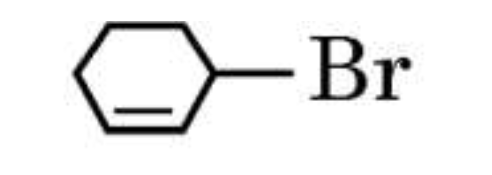 (B)
(B)
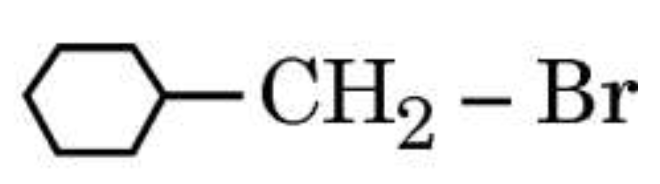 (C)
(C)
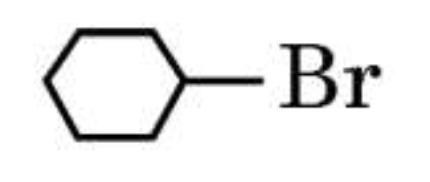
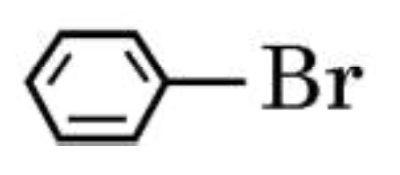
 (ii)
(ii)